TRACK 2
Building New Services and Revenue in a Connected World
Enterprise Transformation, IoT and IIoT, Unified Communications and Collaboration
Published Sep 4, 2026
Selling faster pipes gets harder every year, so the communications industry has spent more than a decade looking for revenue above the connection. The original track on this subject examined case studies from the sectors where that search looked most promising. They still make a useful map:
- Next-generation unified communications and collaboration
- The Internet of Things and the Industrial Internet
- Industries being transformed by connectivity, including oil and gas, retail and automotive
- Connected cars, smart cities, smart retail and smart agriculture
Cloud computing, internet-enabled devices and wireless access arrived together, and that combination changed how businesses reach customers and run their operations. The interesting question is who captured the value.
Collaboration became software
Unified communications was once a hardware sale: a PBX in a closet and a desk phone on every desk. The pandemic finished what cloud services had started, and collaboration now lives in a browser tab. Carriers kept the numbers and the regulatory obligations, while most of the margin moved to software firms. Plenty of operators now resell those platforms instead of competing with them.
The industrial internet
Industrial IoT turned out to be less glamorous than the keynotes promised, and more durable. A pump that reports vibration before it fails saves real money, which is why digital oilfields were an early success. Mines, ports and factories followed, some of them on private LTE or 5G networks of their own. These projects rarely depend on a clever consumer app. They depend on integration work, long contracts and someone willing to climb a ladder.
The connected car
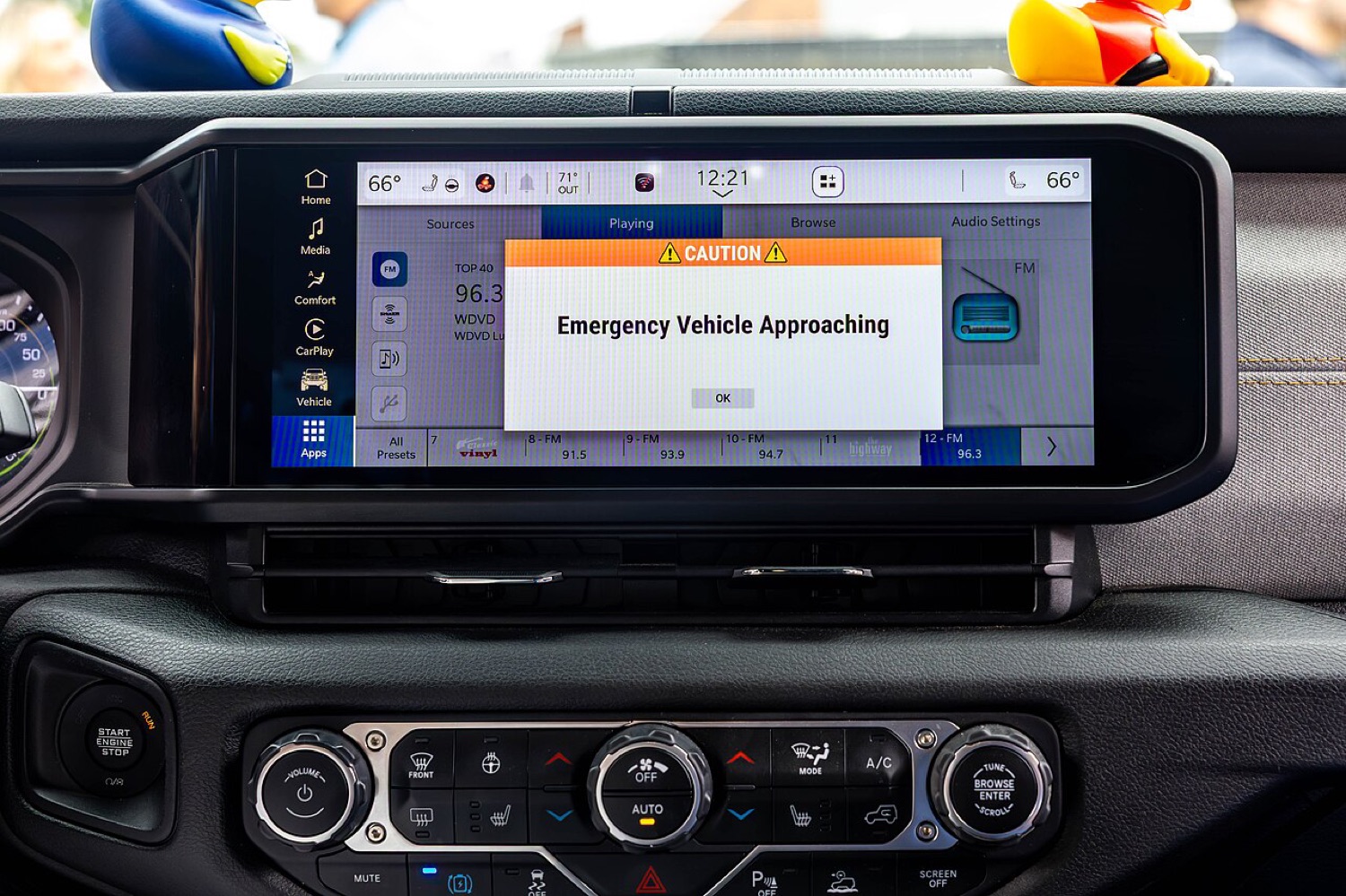
Almost every new car now ships with a cellular modem, which makes the automotive industry one of the largest buyers of connectivity in the world. Early revenue came from safety services and over-the-air updates rather than the in-car shopping some people imagined. The photo above shows a more modest idea that works: a dashboard alert warning that an emergency vehicle is on the way.
Retail, venues and the loyalty loop
Smart retail began with inventory sensors and has moved on to checkout-free stores and shelf analytics. Hospitality got there early for a simple reason. A casino resort has been running a data-driven loyalty program for decades, tying a card or an app to every slot session, restaurant bill and hotel night. Long before most retailers had heard of a customer data platform, the gaming industry had one, along with the network to feed it. We describe how that plumbing works in The Network Behind the Casino Floor.
What the case studies had in common
The projects that lasted shared three traits. They solved a problem someone already paid to fix, they used connectivity as an ingredient rather than as the product, and they involved several parties: equipment makers, integrators, software firms and network operators, each taking a slice. That multi-sided market was already visible in 2015, and it remains the best description of how this business really works.
More from the Journal


